

Why Charles Flint Education & Development Exists
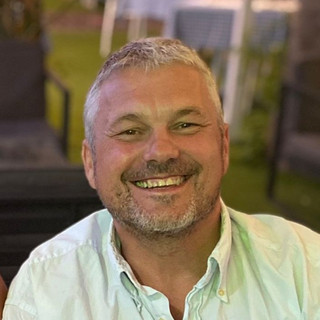
By Dave Flint
The idea for Charles Flint Education & Development started quite personally. I have eight grandchildren, five of them girls, and I found myself wondering whether there was something more I could do to help them navigate the world they are growing up in.
That question had been taking shape through my work as a psychotherapist. Meeting and talking with boys and young men made me increasingly interested in the influences around them: friends, family, school, and the people and ideas reaching them through their phones. I wanted to understand more about what they were hearing, what they made of it and how it affected the way they saw themselves and other people.
That took me towards online culture, including the manosphere. But the more I thought about it, the less it seemed a question about boys alone. My granddaughters are growing up in this world too. They will encounter their own expectations about who they should be, how they should look and what relationships are supposed to involve.
As a grandfather, that matters to me. As a therapist, it gives me plenty to think about.
Starting with the people closest to me
I wanted to offer my grandchildren a positive influence and some balance. To give them opportunities to question what they encounter, but also to understand it. There is a difference between dismissing something and having a conversation about why it appeals, what might be useful in it and what deserves a closer look.
Of course, I have opinions. Being their grandfather and a psychotherapist is unlikely to leave me short of those. But I would like there to be room for their opinions too, including the ones I find harder to hear.
I hope I can be someone they can think things through with. Someone who brings a perspective, listens to theirs and helps them consider what feels right to them and how their choices affect other people.
From there, another question began to form: could I take some of what I was exploring and develop it into courses?
From positive masculinity to “positive everything”
My supervisor encouraged me to explore positive masculinity. She had worked in a sixth-form college for years and brought her own experience of young people to our discussions. That encouragement helped me take the idea further.
I was interested in what we could offer boys and young men that gave them something worthwhile to consider about themselves. Care, courage, loyalty and responsibility all have a place in that conversation, alongside the more difficult questions about behaviour, relationships and the expectations they encounter.
Positive masculinity was the starting point. Then, as I sometimes describe it, it became “positive everything”.
That is a rather ambitious phrase. I don’t mean putting a cheerful interpretation on every difficulty. I mean that my interest kept widening. The questions I was thinking about with boys also connected with girls, parents, relationships and the adults supporting young people. Different experiences, certainly, but plenty of shared ground.
How do we make sense of what influences us? What do we want to hold on to, and what might we want to question? How do we live alongside people who see things differently?
Those questions interest me personally as well as professionally.
Giving the idea somewhere to grow
Charles Flint Education & Development grew out of that interest. It gives me a way to develop courses, professional training and resources alongside my therapy and coaching work.
The work includes a particular interest in boys and young men, and in supporting the counsellors, psychotherapists and other professionals who work with them. There are also wider plans around parenting and relationships. Each needs time and thought; the business will develop as the work does.
What I hope runs through it is the same thing I wanted for my grandchildren: a positive influence, some balance, and space to question and understand. I want to bring my experience into that work and keep learning from the people who take part.
There is more to say about how that might look in practice. But the reason I started is fairly simple. My work had given me questions, my family had made them personal, and I wanted to see whether I could turn that concern into something useful.

Comments